Your Calling Card
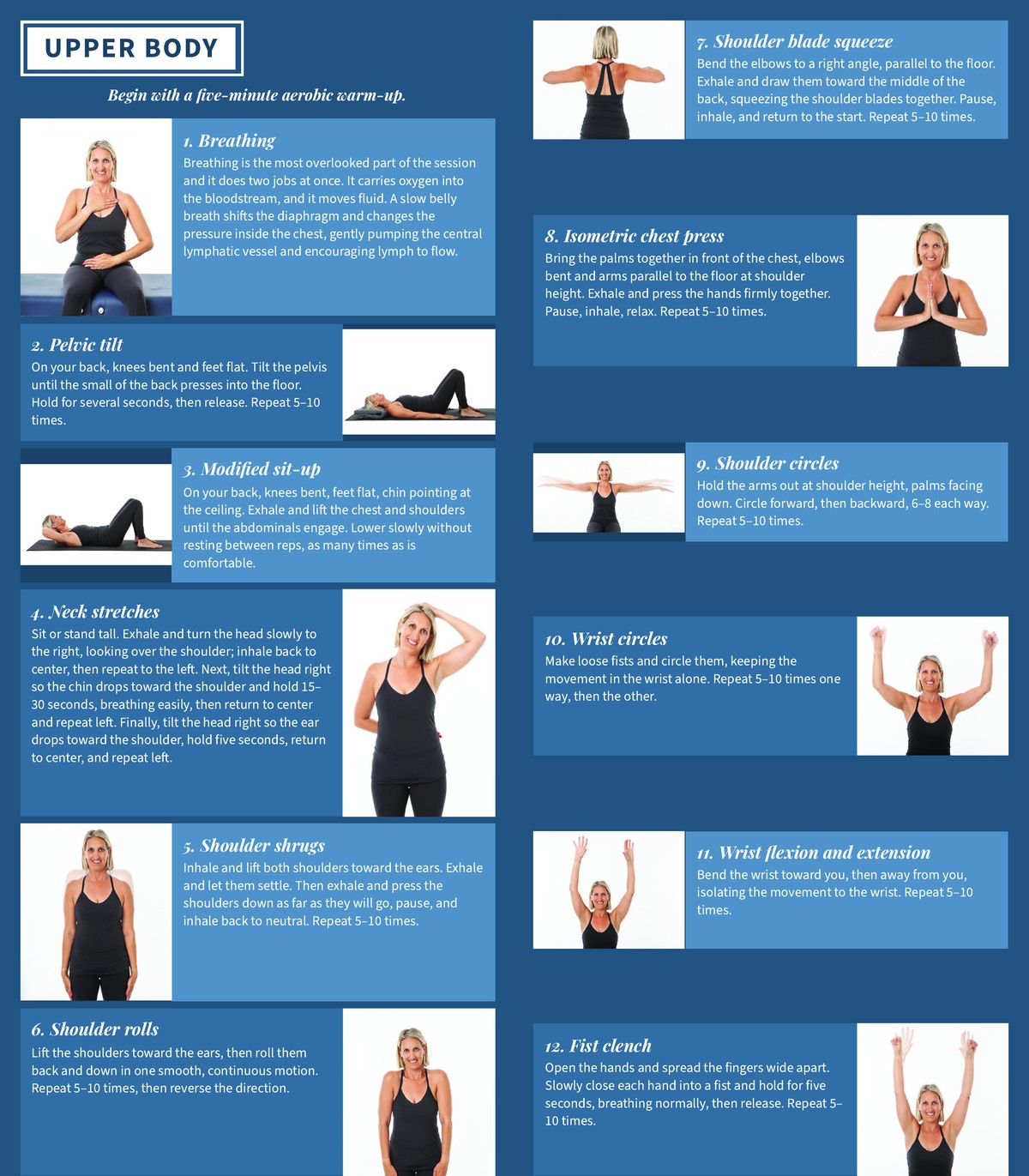
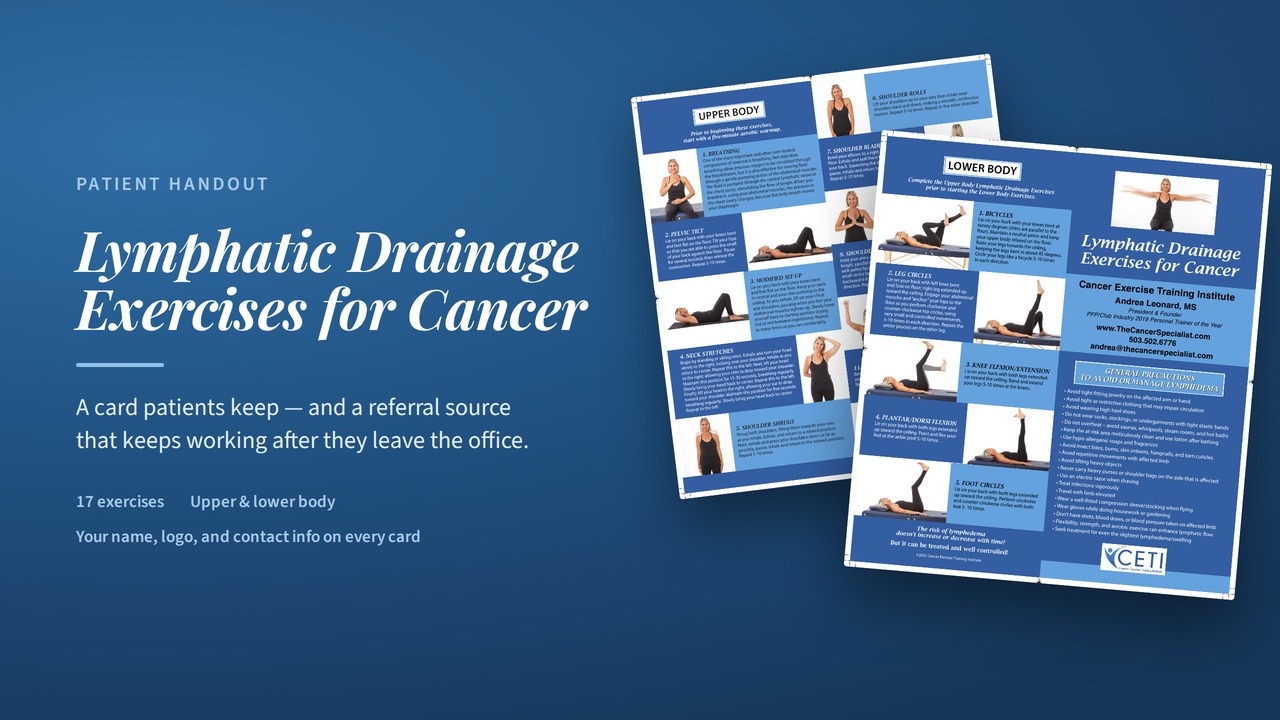
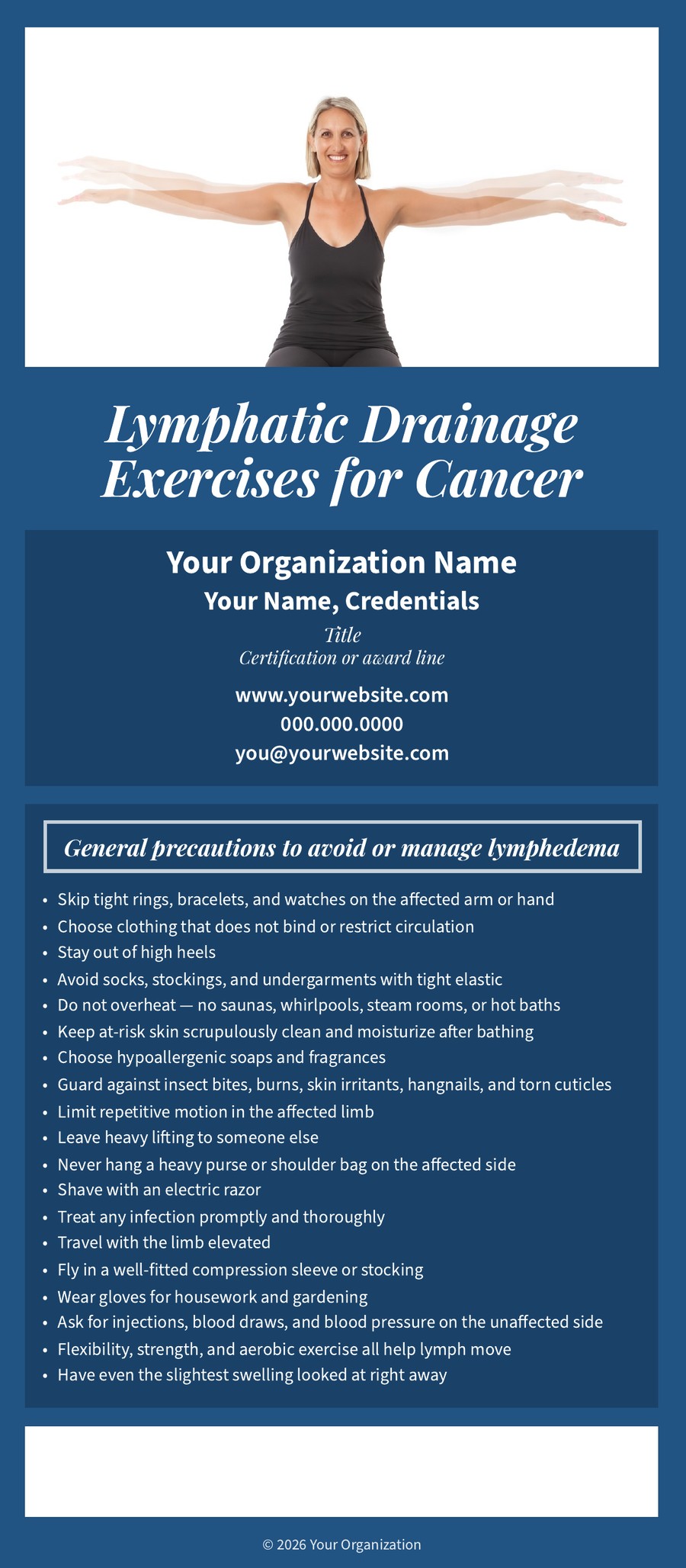
Every oncologist, breast surgeon, and physical therapist has the same problem: a patient asks what they can do about lymphedema, and there's nothing to hand them. The visit ends, the advice fades, and nobody follows up. These cards solve that. Seventeen physician-appropriate lymphatic drainage exercises, clear photos, and a precautions list patients actually keep on the fridge. Your name, your phone number, your logo on the front. The doctor gets a credible handout that costs them nothing and makes their advice stick. The patient goes home with something they can use that night. And when they're ready for supervised work, your number is already in their hand. A stack of these on a reception desk works every day of the week. Drop off fifty cards, introduce yourself, and let the card do the rest.
Strong professional relationships with healthcare providers can play an important role in growing your lymph drainage practice and becoming a trusted resource within the medical community. Begin by understanding the professionals who may be involved in the care of the clients you serve, including physicians, oncology teams, physical and occupational therapists, nurses, rehabilitation specialists, and lymphedema therapists. Learn what each professional does, where your services may complement their care, and where your scope of practice begins and ends. This allows you to communicate your value without overstating your role.
When introducing yourself, focus on collaboration rather than promotion. Clearly explain your training, the services you provide, and the types of clients who may benefit. Listen carefully to the provider’s concerns and priorities, and tailor your communication accordingly. Healthcare professionals are more likely to develop trust when you demonstrate professionalism, understand appropriate contraindications and precautions, and recognize when a client should be referred back to the medical team. Your goal is to become someone they feel comfortable including as part of a coordinated approach to care.
Building the relationship does not end after the first conversation or referral. Maintain appropriate communication, provide updates when relevant and permitted, respond promptly to questions, and make the referral process as easy as possible. Periodic professional contact, educational resources, collaborative discussions, and a simple thank-you for referrals can help keep the relationship active without becoming intrusive. Consistency is important. A healthcare provider who repeatedly sees that you communicate well, respect boundaries, and prioritize the client’s safety is far more likely to remember and recommend your services.
Ethics and professional boundaries should guide every interaction. Never imply that lymph drainage replaces medical treatment, make claims beyond your qualifications, or pressure a healthcare professional for referrals. Respect privacy requirements, obtain appropriate client consent before sharing information, and remain within your professional scope. Cultural awareness and empathy are equally important when working with multidisciplinary teams. Different professionals may have different communication styles, clinical philosophies, and expectations. Being adaptable, respectful, and receptive to their expertise helps create genuine collaboration.
Ultimately, successful networking in healthcare is not about collecting business cards—it is about becoming a credible and dependable professional resource. When healthcare providers recognize that you are knowledgeable, respectful, communicative, and genuinely committed to appropriate client care, stronger relationships and referrals can develop naturally. Those partnerships can expand the reach of your services while supporting a more coordinated continuum of care for the people you serve.